What is Project Pan? How it works & tracker app
Project Pan is a challenge to finish existing makeup and skincare before buying more. Learn the core rules, how long makeup lasts, and how to track uses.
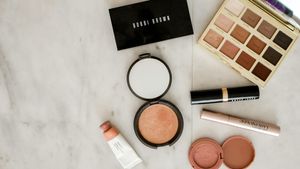
Project Pan is a mindful beauty challenge where you commit to using up the makeup, skincare, and beauty products you already own before purchasing new ones. The goal is to reduce cosmetic waste, save money, and counter the constant impulse to buy new product launches while older favorites sit forgotten in bathroom drawers.
The term comes from pressed powder cosmetics such as blush, bronzer, and eyeshadow. When you use a powder product repeatedly over months, the center gradually dips until you expose the shiny silver metal base underneath, a milestone known in the beauty community as "hitting pan." Continuing to use the product until every trace along the outer rim is gone results in an "empty."
If you want to track your Project Pan, you can use timespent to count uses for each product until you hit pan.
How Project Pan works
Because Project Pan is a personal challenge rather than a rigid test, participants adapt their setup to fit their collection size. Most people follow five basic guidelines:
- Pick a small starting batch. Choose a focused group of products rather than attempting to tackle your entire vanity at once. Most beginners start with 5 to 10 items (often called a "Project 10 Pan"), typically choosing products that are already partially used or everyday staples like mascara, tinted moisturizer, and lip balm.
- Pause buying in those categories. You commit to a strict no-spend challenge ("no-buy" or "low-buy" policy) for the categories included in your project. If you put a coral blush into your Project Pan, you cannot purchase another blush until that compact is either finished or hit pan.
- Keep project items in reach. Keep your project products easily accessible on your counter rather than tucked inside organizers. Seeing them every morning encourages consistent daily use. You can allow yourself one or two rotating items on weekends so you do not tire of a single shade.
- Declutter expired or irritating items. Project Pan focuses on intentional use, much like the "spark joy" filter in the Marie Kondo daily routine. If a product expires, changes texture or scent, causes skin irritation, or feels uncomfortable to wear, discard or donate it without guilt. Forcing yourself to use an irritating or unflattering product (often called "hate panning") works against the goal of enjoying what you own.
- Log each use. Track each application so that gradual progress becomes visible. While powder levels can seem unchanged after weeks of use, watching a usage counter climb gives you concrete proof of progress.
How many uses does it take to finish a makeup product?
Most people drastically underestimate the number of applications required to empty cosmetic packaging. Powdered pigments are concentrated, requiring less than 0.01 grams per application. As a result, a single blush or bronzer can easily survive a full year of daily wear.
Community tracking data and standard cosmetic fill weights provide realistic benchmarks for common product types:
| Product type | Standard size | Uses to hit pan | Uses to completely empty |
|---|---|---|---|
| Bullet lipstick | 3.5 g (0.12 oz) | N/A (tube) | 250–350 applications |
| Liquid foundation | 30 ml (1.0 fl oz) | N/A (bottle) | 150–220 pumps |
| Pressed powder blush | 5 g–6 g | 150–250 sweeps | 450–650 sweeps |
| Single eyeshadow pan | 1.5 g (0.05 oz) | 80–150 sweeps | 300–450 sweeps |
| Mascara tube | 8 ml–10 ml | N/A (tube) | 90–120 uses |
| Lip balm tube | 10 g (0.35 oz) | N/A (tube) | 350–500 applications |
A standard 30-milliliter foundation bottle dispensed at 1 to 2 pumps per morning will last roughly 4 to 6 months of daily use. In contrast, a pressed blush applied once daily often takes 15 to 18 months to reach the metal pan, and over two years to clear entirely. Knowing these numbers in advance prevents frustration when your compacts seem indestructible.
How to track your Project Pan
To manage your project without messy spreadsheets, use timespent to log each application with a single tap on your iPhone. Instead of guessing how much product remains inside opaque bottles or struggling to update desktop spreadsheets, timespent lets you create a Simple Tally for each product in your active rotation.
You can set up a tally for your daily foundation, blush, or lip color and add a +1 each morning when getting ready. Beauty content creator Vivian Nguyen (@vivnguyenbeauty) uses timespent to track her Project Pan progress, documenting her verified tally counts on screen in her Project Pan Update No. 43 and app walkthrough. She records each use before finishing a product, giving her followers an exact record of how many applications everyday essentials require.
timespent displays your daily logging on a calendar heat map, so you can see steady consistency build across weeks and months even when compact levels change slowly. You can organize your items into an Unscripted Arc titled "Project Pan" to view total applications across your entire collection, or mark milestones with Moments when you expose the center metal pan on a favorite powder.
Common questions
How do you know when makeup has expired?
Check the Period After Opening (PAO) symbol printed on the back or bottom of cosmetic packaging, which looks like an open jar with a number and the letter "M" (such as 6M, 12M, or 24M). This indicates how many months the product remains safe and effective after the protective seal is broken.
| Product type | Typical PAO lifespan | Warning signs of spoilage |
|---|---|---|
| Mascara and liquid liners | 3 to 6 months | Chemical smell, dryness, clumping |
| Liquid foundation and concealer | 6 to 12 months | Oil separation, sour odor, color shift |
| Cream blush and lipsticks | 12 to 18 months | Crayon-like scent, wax sweating, dragging |
| Powder eyeshadow and blush | 24 to 36 months | Hard surface glaze, loss of pigment payoff |
Liquid and cream products spoil much faster than pressed powders because water allows bacteria and mold to grow. Mascara carries the highest risk of eye infection and should be discarded after 3 to 6 months regardless of how much product remains in the tube.
What is the difference between Project Pan and Project 10 Pan?
Project Pan is the umbrella philosophy of using up beauty products, whereas Project 10 Pan is a specific structured format where you select exactly 10 products to finish within a defined timeframe, usually over six months or a full calendar year.
Selecting a fixed number helps prevent choice fatigue. Beginners often find 10 items manageable because it covers one basic everyday makeup routine: primer, foundation, concealer, setting powder, bronzer, blush, one neutral eyeshadow, mascara, brow gel, and a versatile lip product.
How do you hit pan faster without wasting product?
Use your products consistently every day, apply them with the proper tools, and stick to one formula per step rather than rotating across different drawers. Dense makeup brushes pick up powder more evenly than fluffy brushes, ensuring you use what you pick up without kicking up excess dust that gets blown away.
Avoid artificial shortcuts like gouging into the center of a compact or over-applying layers just to empty a container faster. Project Pan encourages mindful consumption and helps you get full value from the cosmetics you already bought.