Japanese walking: interval method & timer app
Japanese walking alternates 3 minutes of brisk walking with 3 minutes of slow walking for 30 minutes, 4 days a week, to build fitness and leg strength.
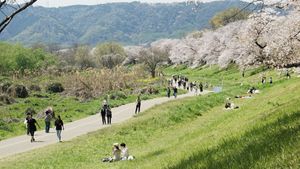
Japanese walking—known in sports science as Interval Walking Training (IWT)—is a 30-minute workout where you alternate 3 minutes of brisk walking with 3 minutes of slow recovery walking for five rounds, four or more days a week. Developed by exercise physiologists Dr. Hiroshi Nose and Dr. Shizue Masuki at Shinshu University in Japan, the 3-3 rhythm gives you the heart and muscle benefits of interval training without the joint pounding of running.
A casual neighborhood stroll feels good, but your body quickly adapts to an easy, unchanging pace. Once your heart rate stops rising and your legs stay in their comfort zone, walking more steps takes up more of your afternoon without making you noticeably fitter or stronger. Adding five 3-minute brisk pushes turns a half-hour walk into a real cardiovascular workout, though checking a wristwatch every three minutes gets tedious fast unless you have an interval timer chiming in your pocket.
If you want a Japanese walking app that cues every 3-minute switch automatically, you can use timespent to run a custom 3-3 interval timer and log your weekly walks.
How the 3-3 Japanese walking method works
One full session of Japanese walking takes 30 minutes of interval work—five rounds of 3 minutes fast and 3 minutes slow—preceded by a short easy warm-up.
Here is how each phase of the 30-minute session feels in practice:
| Interval phase | Duration | Effort level | Breathing cue |
|---|---|---|---|
| Easy warm-up | 2 to 3 min | Casual stroll | Breathe through nose |
| Fast interval | 3 minutes | 70%+ peak effort | Short phrases only |
| Slow interval | 3 minutes | 40% easy effort | Catch your breath |
| Full session | 30 minutes | 5 total rounds | Warm but refreshed |
You don't need a heart rate chest strap or a laboratory treadmill to find the right speeds. In the community walking programs run across Matsumoto and Nagano, instructors teach two simple physical cues:
- Walk the 3-minute fast interval as if you're late for a train. Pick up your pace until you feel your breathing deepen and your heart beat faster within the first 60 seconds. On a 1-to-10 effort scale, aim for a 7 ("somewhat hard"). You should still be able to answer a quick question in a three-word phrase, but you shouldn't have enough spare breath to tell a long story. Keep your feet rolling smoothly along the ground rather than breaking into a jog.
- Drop to a genuine stroll for the 3-minute slow interval. As soon as the 3-minute fast block ends, slow all the way down to an unhurried, window-shopping walk. The slow block isn't wasted time; it lets your heart rate settle and clears fatigue from your calves and thighs so you can hit the next fast interval at full speed.
- Repeat the 3-3 cycle five times in a row. Alternating 3 minutes fast and 3 minutes slow five times totals 30 minutes (15 minutes of brisk walking and 15 minutes of active recovery). Finish on your fifth slow interval so your heart rate cools down before you step back inside.
What the Shinshu University study found
Alternating between fast and slow walking builds significantly more leg strength and aerobic fitness than walking 8,000 to 10,000 steps at a steady, comfortable pace.
In the landmark 2007 Shinshu University study published in Mayo Clinic Proceedings, Dr. Hiroshi Nose, Dr. Ken-ichi Nemoto, and their colleagues tracked 246 middle-aged and older adults (average age 63) over five months. Participants were split into three groups: a non-walking control group, a continuous walking group that walked at least 8,000 steps a day at a steady moderate pace four or more days a week, and an interval walking group that did five 3-minute fast / 3-minute slow cycles four or more days a week.
After five months, the differences between steady walking and 3-3 interval walking were striking:
- Stronger legs: The interval walking group increased their front thigh (knee extension) strength by 13% and their hamstring (knee flexion) strength by 17%. The steady 8,000-step group saw almost zero change in leg muscle strength.
- Higher aerobic fitness: Peak aerobic capacity climbed by about 10% in the interval walkers, while barely budging in the continuous walking group.
- Lower resting blood pressure: Resting systolic blood pressure dropped by an average of 9 mmHg (and diastolic by 5 mmHg) in the interval group—roughly three times the drop seen in the steady-pace walkers.
The biological reason comes down to muscle fiber recruitment and stroke volume. When you stroll at a casual pace, your legs rely almost entirely on slow-twitch muscle fibers that can work for hours without getting tired, so your brain never has to switch on the stronger fast-twitch fibers in your quads and glutes. Pushing to a brisk pace for three full minutes forces your nervous system to recruit those higher-threshold muscle fibers and makes your heart pump a larger volume of blood with every beat. Stopping at the three-minute mark—just before your legs burn out—lets you accumulate 15 minutes of hard work in a single outing without joint strain.
Posture and pacing cues for the fast intervals
When people try to walk fast without jogging, they often lean forward from the waist or reach too far ahead with their front foot, which makes their shins ache after ten minutes. Four simple form adjustments make the fast intervals feel smooth and powerful:
- Keep your eyes 15 to 20 feet ahead: Looking down at the pavement or a phone screen tilts your head forward, rounds your upper back, and constricts your breathing when you need extra oxygen. Keep your chin level and your shoulders relaxed down away from your ears.
- Bend your elbows to 90 degrees and drive them back: Your legs naturally match the tempo of your arms. Keeping your arms straight at your sides slows your turnover like a long pendulum. Bending your elbows at a right angle and swinging your hands briskly from your hip pocket toward your breastbone automatically speeds up your steps.
- Push off from your back toes instead of reaching in front: Try to lengthen your stride behind your body rather than in front of it. Landing with your front foot too far out ahead of your hips acts like a brake on every step and stresses your knee joint. Land softly on your heel underneath your body, roll through your midfoot, and push the pavement away behind you.
- Don't rush the 3-minute recovery walk: The most common beginner mistake is walking at a medium clip during the slow intervals out of impatience. If you don't slow down enough to catch your breath during the recovery window, your fast intervals will gradually slow down by round three until the whole walk blurs into one medium pace.
Japanese walking vs. 10,000 steps and 12-3-30
Japanese walking, a daily 10,000-step target, and the 12-3-30 treadmill workout solve different problems depending on how much time you have and where you walk:
| Method | Time needed | Equipment | Primary benefit |
|---|---|---|---|
| Japanese walking | 30 minutes | None (flat path) | Fitness & leg strength |
| 10,000 steps a day | 75 to 100 min | Step counter | All-day movement |
| 12-3-30 workout | 30 minutes | Incline treadmill | High-heart-rate climb |
A 10,000-step goal is a great way to break up a sedentary desk job, because getting up for short errands and evening walks keeps your joints moving and blood sugar steady all day. However, 10,000 slow steps take roughly 90 minutes to complete and rarely push your heart or leg muscles hard enough to improve your fitness ceiling.
The 12-3-30 workout (walking at a 12% incline and 3.0 mph for 30 continuous minutes) provides a tough cardiovascular session, but it locks you indoors on a motorized treadmill and puts continuous tension on your calves and Achilles tendons for half an hour straight. Japanese walking gives you a comparable 30-minute fitness stimulus outdoors on any flat sidewalk, park loop, or track, with built-in 3-minute recovery breaks that protect your calves and lower back.
How to use timespent as a Japanese walking timer app
You can use timespent to run an automatic 3-3 Japanese walking timer with audio cues in your pocket and track your weekly walking hours in one place.
Create a Timed Activity for Japanese Walking and open its built-in Interval Timer settings. Set the timer to 5 sessions of 3 minutes with 3-minute breaks, and turn on background notifications and distinct sounds for session start, break start, and completion. Once you start your walk, you can slip your phone into your pocket and rely on the audio chimes to tell you when to speed up and when to slow down—or glance at your active interval countdown on the Lock Screen and in the Dynamic Island.
Every finished walk saves directly to your Activity page (and you can also connect Apple Health so outdoor walks recorded on your watch log on their own). Set a weekly Do More goal of 2 hours (four 30-minute sessions a week) to watch your progress bar fill up in My Day, see your walking days build across your monthly calendar heat map, or group your walks with your other health routines inside an Unscripted Arc that tracks your total days active without streak pressure.
Common questions
How many days a week should you do Japanese walking?
Aim for at least 4 days a week (2 total hours of walking, including 60 minutes of brisk intervals). In the Shinshu University trials, four 30-minute sessions per week was the threshold that produced measurable gains in thigh strength, aerobic capacity, and blood pressure over five months.
Here is how your weekly fast-interval minutes and total walking time add up across different schedules:
| Weekly schedule | Fast walking | Total walking | Monthly hours |
|---|---|---|---|
| 3 days a week | 45 min / wk | 1 hr 30 min | 6.5 hours |
| 4 days a week | 60 min / wk | 2 hours | 8.5 hours |
| 5 days a week | 75 min / wk | 2 hr 30 min | 11 hours |
| 6 days a week | 90 min / wk | 3 hours | 13 hours |
If you are brand new to exercise, starting with 3 days a week for the first two weeks lets your shins and hips get used to the brisk pace before you move up to the standard 4- or 5-day schedule. You can also pair a 4-day interval walking plan with a gentler daily wellness framework like the 75 Soft challenge.
Can you split the 30 minutes into two shorter walks?
Yes, you can split your intervals across the day as long as you accumulate at least 60 minutes of fast walking over the week. Follow-up research from the Shinshu University team showed that the key driver of progress is total weekly time spent in the brisk zone (60+ fast minutes per week, or 20+ three-minute fast intervals). If you don't have a full half-hour block at lunch, doing three 3-3 rounds in the morning (18 minutes) and two or three rounds after work—similar to the morning and evening walks in the Mahatma Gandhi daily routine—delivers the same weekly training stimulus. If you work from home, a 3-round (18-minute) interval walk also fits neatly into the recovery break of the 52/17 rule.
How fast is the brisk interval in miles per hour?
For most adults, the 3-minute brisk interval lands between 3.5 and 4.5 mph (5.6 to 7.2 km/h), while the 3-minute slow recovery stroll sits around 2.0 to 2.7 mph (3.2 to 4.3 km/h). Because leg length and starting fitness vary widely, a speed that feels like an easy warm-up for a tall runner might be an all-out sprint for a shorter walker. Instead of locking onto a fixed mph number, judge the fast interval by your breathing: you should feel warm, swing your arms briskly, and breathe deeply enough that you prefer speaking in short phrases rather than full sentences.